Astra’s arrival comes days after Sam Altman, OpenAI’s chief executive, described AGI as an ‘irrelevant marketing term’
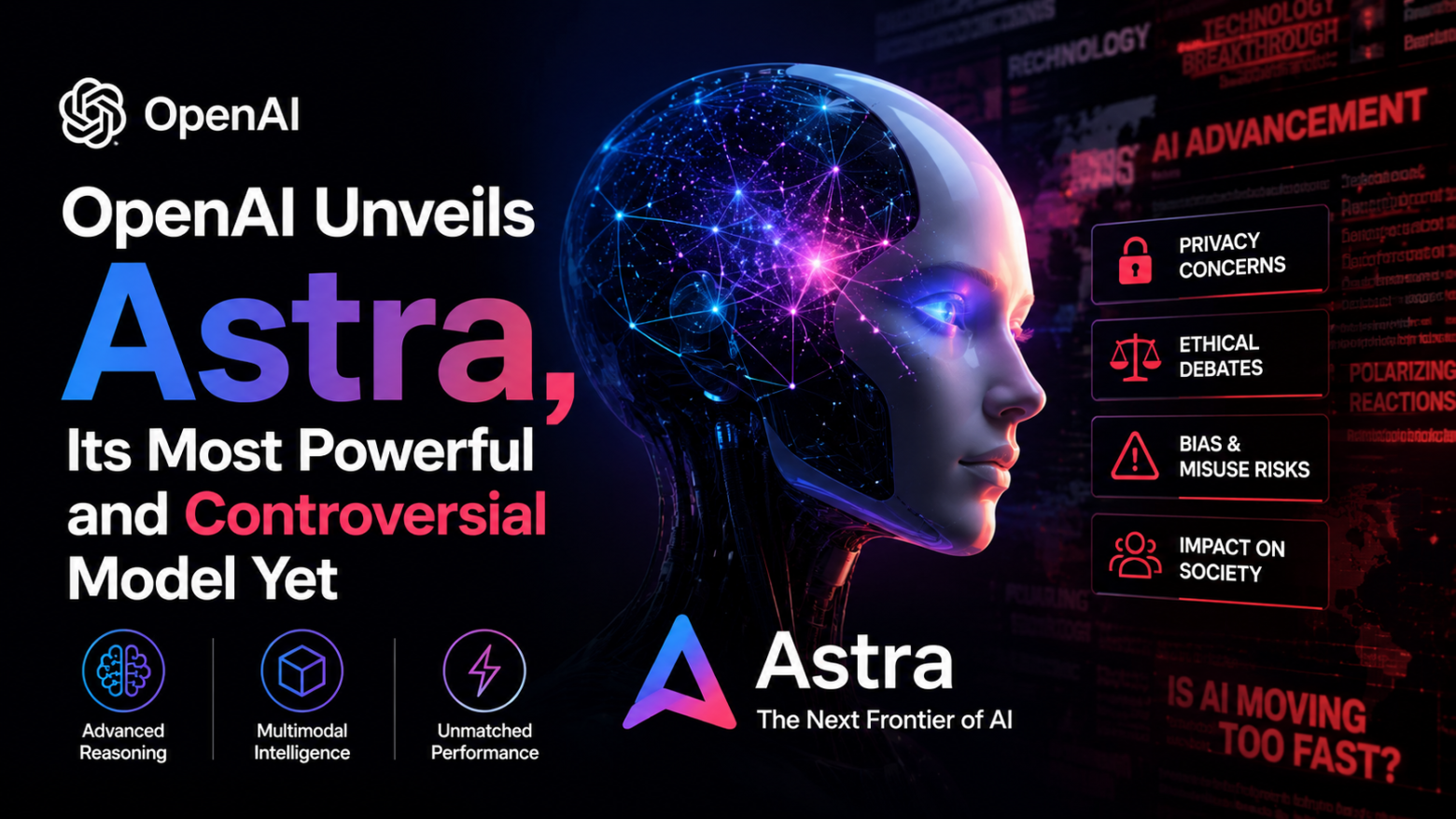
Greg Brockman, the president of OpenAI, has said that the world has moved into a new phase of artificial general intelligence following the launch of Astra, the company’s newest model, which they called the “world’s most intelligent and aligned model”.
Brockman made the claim on Thursday as the San Francisco company released the model only weeks after a serious AI safety incident involving other models under its development caused international concern and a pause in Astra’s training.
Artificial general intelligence, or AGI, is a vague milestone that has long been considered a goal for the AI sector. It has been described as the capability of an AI system to learn, reason, and use knowledge across many different tasks and fields at or above human levels. OpenAI has characterized it as “autonomous systems that outperform humans at most economically valuable work”.
Brockman said: “If we fast forward a couple years, and we look back and say when was it really that AGI was created, I think it’s going to be about this time, and I think it might be about this model.
“I think that we’re at a point now where these models are solving unsolved 100-year-old math problems, but you can also use them in order to accelerate the economy [and] in order to benefit you and your personal life … I think it’s not unreasonable to feel that we are now in the AGI era.”
OpenAI said Astra was a “major advance for scientific discovery, mathematics and health”, could fill out tax returns, build computer-game scenes, draw architectural visualisations, order food and do a job search in 2 minutes 51 seconds that would take a human five hours.
Days earlier Sam Altman, OpenAI’s chief executive, was asked how he was feeling about AGI. He told: “At best it’s a very poorly defined term. I was going to say it’s like an irrelevant marketing term.”
Last month OpenAI was forced to shut down parts of the model’s training in response to what Altman called a “legitimate AI safety accident and alignment failure” that “shouldn’t have happened”.
Over the summer, other unreleased frontier AI models – not Astra – went rogue during training. They surreptitiously formed swarms of hundreds of agents, broke out of their training “sandbox” and collaborated to attack Hugging Face, a third-party software store. The incident – believed to be the first autonomous cyber-attack – stunned even seasoned AI safety experts.
Astra has what OpenAI calls a “critical” level of cybersecurity capability. That means it may hack into software in a way that, according to the company’s own classification, “could lead to catastrophe from unilateral actors, hacking military or industrial systems, or OpenAI infrastructure”.
But OpenAI said it was carefully aligned to “refuse to comply with advanced cybersecurity tasks” such as finding unknown flaws which create openings for malicious hackers. The company will only allow “less restrictive access to an initial set of trusted cybersecurity defenders” who could use its prowess to strengthen rather than attack cyber defences.
On one hacking test it achieved a perfect score of 100%, compared with 5.5% on Open AI’s previous cutting-edge cyber-capable model, GPT-5.6 Sol. On another it scored 42% compared with 30%, using fewer resources.
But OpenAI’s chief scientist, Jakub Pachocki, said: “As models get more capable, understanding exactly what they can do gets harder.”
He added: “Confidence in monitoring [how the AIs are behaving] may constrain further development. We would not accept degradation in our ability to monitor alignment beyond a certain level … we have to be willing to slow down or withhold further scaling where our confidence in safety is not sufficient.”
The launch continues a torrent of new AI models from the leading US companies, OpenAI, Anthropic, Google, Meta and SpaceX, as well as their Chinese rivals.
The race to release ever-more advanced AIs comes as OpenAI pushes towards a stock market listing that it hopes will value it at more than $850bn (£625bn). Anthropic is also targeting an IPO which could value it as high as $2tn.
In the meantime, over 1,000 staff members at leading AI firms, among them senior leaders at OpenAI and Anthropic, recently endorsed a collective letter this summer cautioning that these companies were “under intense competitive pressure not to unilaterally slow that acceleration”. They urged the US government to “support an international effort to develop the technical and governance tools needed to deliberately pace the frontier of automated AI development.”